Docent PED / WBDA & Materiaalkunde
Docent PED / WBDA & Materiaalkunde
Material selection and material acceptance are decisive for the reliability and safety of pressure equipment and installations. In practice, this is not only about choosing a steel grade, but about correctly interpreting standards, material designations and documentation. In this training course, you work from the practical context of piping and pressure equipment. You learn how design standards, material standards and certification come together in the choices you make as an engineer or inspector.
The emphasis is on assessing materials and documentation within PED and WBDA. The content is based on commonly used standards and field applications, including EN, ASTM and ASME, and is directly aligned with how materials are specified, supplied and inspected in practice.
Course type
Technical Modules
Teaching location
Rotterdam
Course days
2 avonden
Start date
10-11-2026
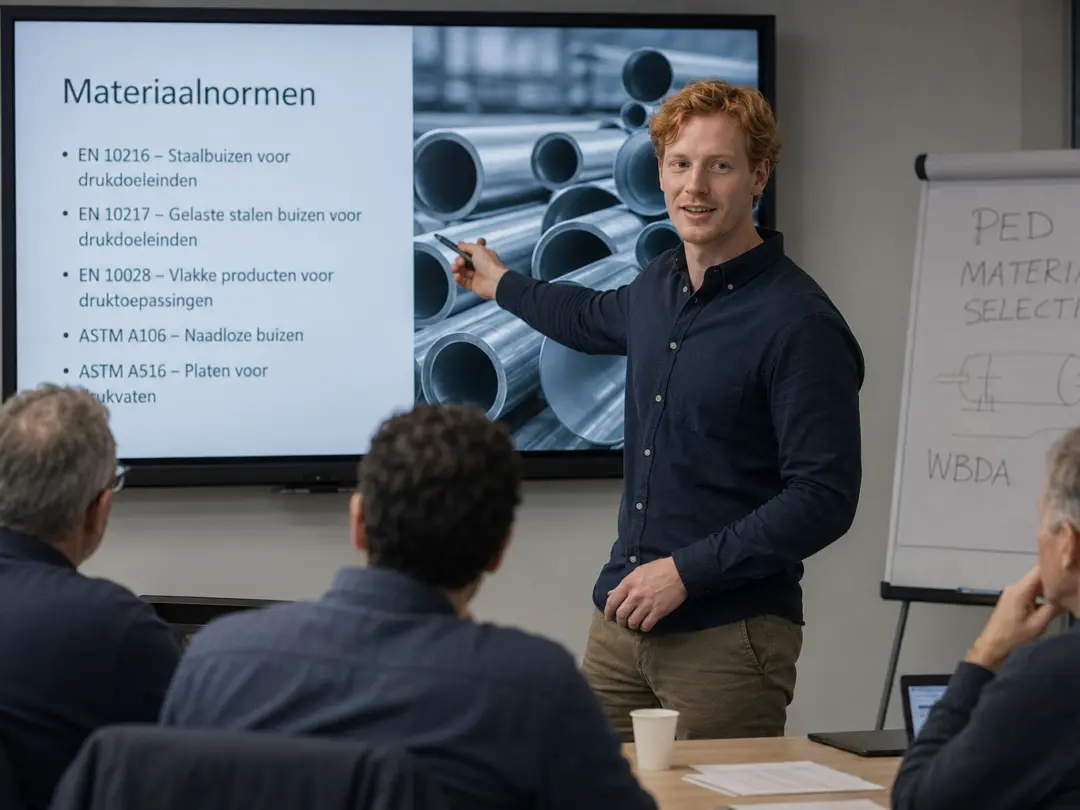
During the first session, the focus is on material selection and the interpretation of standards within a design and operating context. You will work on understanding the relationship between design standards and material standards, such as EN 13480 and ASME B31.3, and learn how these affect the selection and specification of materials. You will also examine the structure and meaning of material designations according to both EN and ASTM, and learn how to interpret steel designations such as P235GH, 1.4404 and ASTM A106 correctly.
Attention is also given to dimensions and wall thicknesses in relation to application, and to comparing material equivalents between European and American standards. Finally, the application of materials within new-build projects under PED and during the operational phase under WBDA is covered, including the role and content of Particular Material Appraisals.
During the second session, the focus shifts to material acceptance and certification. You will learn how to assess materials and the associated documentation before they are used in an installation. This includes the different types of inspection documents according to EN 10204, including the differences compared with the older 1991 standard, and when each type of document is required under PED.
You will also learn how to assess and check material certificates, with a focus on the relationship between risk, application and documentation requirements. Using practical examples, you will analyse certificates and possible deviations, before applying the knowledge gained in a final assessment.
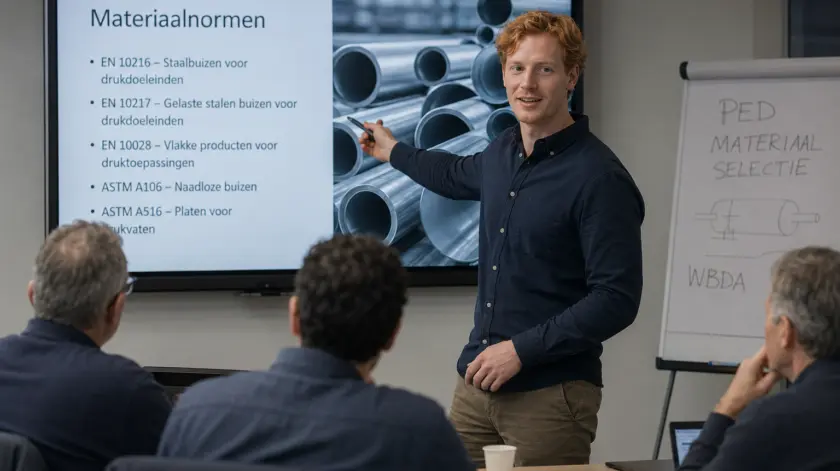
The Materials Engineering training course is intended for engineers, technicians, QC professionals and other professionals who work with technical materials and want to deepen their knowledge. Whether you are involved in design, production, quality control or maintenance, this practice-based Materials Engineering training course is suitable for professionals who want to strengthen their technical understanding without following a long-term academic programme.
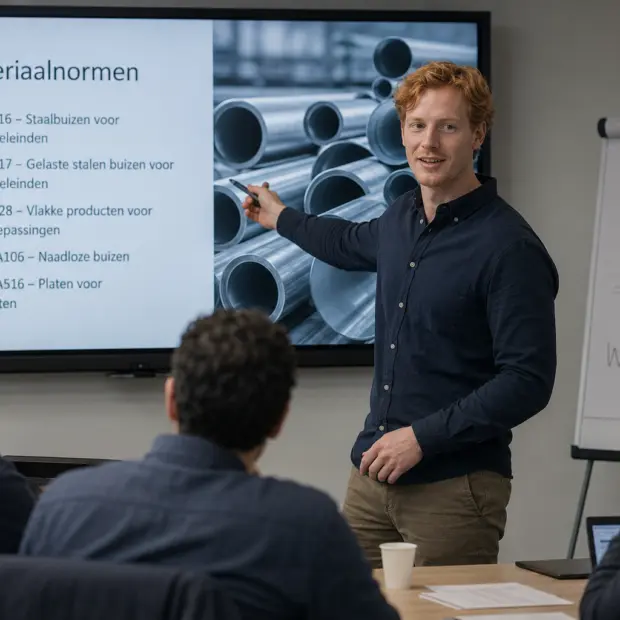
The training course consists of two evening sessions from 17:30 to 22:00. Course materials and a certificate of participation are included. The fee is €745 per person, excluding VAT.
Investment: €745 excluding VAT
Duration: 2 evenings
Docent PED / WBDA & Materiaalkunde




Training delivered at your location

Arno Jordans | 03-03-2027
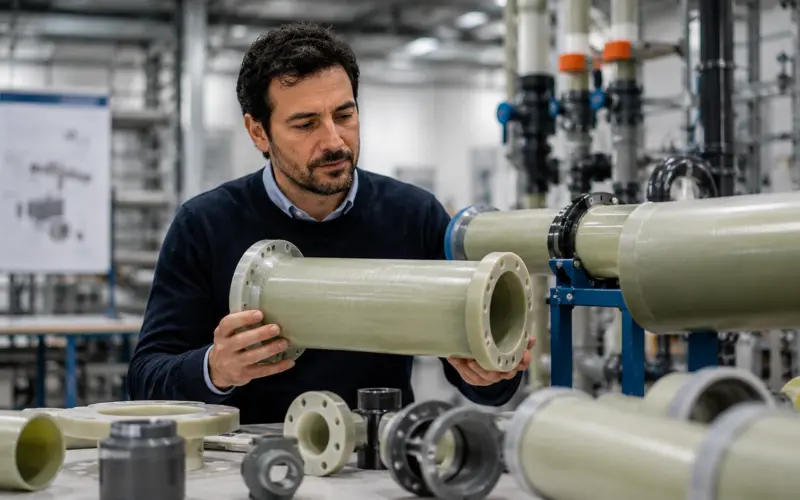
Thermoplastic piping systems have been used in piping and equipment construction for decades, but the growing demand for corrosion-resistant and sustainable solutions is further increasing the use of thermoplastics. Dosign Academy’s Thermoplastic Piping Systems training course explores the technical possibilities, material properties and design requirements of thermoplastic piping in greater depth, enabling you to assess complex situations more effectively and advise on suitable solutions at the right technical level.
Richard van den Ende | 06-10-2026
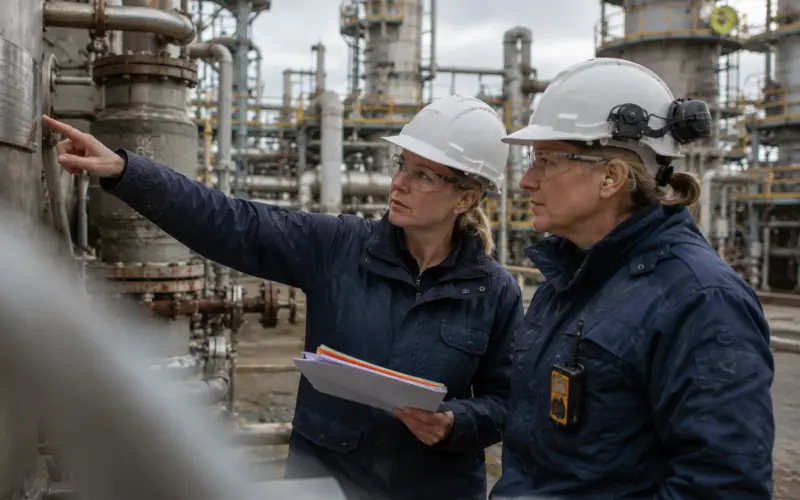
This PED and WBDA training course focuses on the application of the Pressure Equipment Directive, PED 2014/68/EU, and the Dutch Commodities Act Decree on Pressure Equipment within industrial projects. In practice, PED is rarely about theory alone. It is about correctly defining scope and obligations. Especially in brownfield modifications, replacements and extensions, the distinction between mandatory and optional requirements is often unclear.
This regularly leads to unnecessary calculations, overly heavy conformity assessment module choices and more involvement from a Notified Body than necessary. In this training course, you learn how to classify pressure equipment correctly, determine the correct PED category and conformity assessment module, and identify when inspections such as KVI are actually required. The emphasis is on making the right technical decisions under PED and WBDA in Dutch practice, from new-build projects to modifications and the management of existing installations.

Mohammad Arab | 15-01-2027
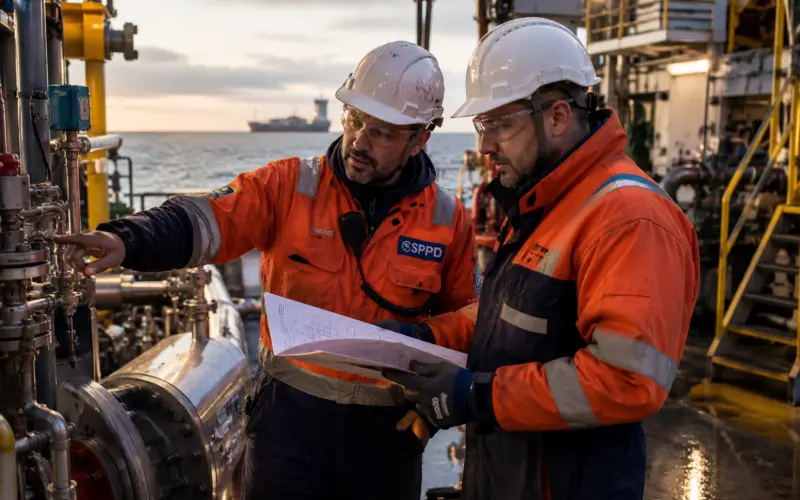
Mechanical systems are at the heart of industrial installations. Piping, pumps, heat exchangers and cooling systems ensure that processes continue to operate safely, reliably and efficiently. With Dosign Academy’s Mechanical Systems & Skid Construction training course, you develop insight into how these components work together to form a complete installation. You will learn not only to understand individual components, but above all to recognise the interaction within complete mechanical systems and skids.
Materials engineering forms the basis of many technical decisions. At Dosign Academy, we combine fundamental theoretical knowledge with practical insight, so you understand why materials behave the way they do and how to use this knowledge within projects and production environments.
Personal advice and guidance
Every professional works in a different context. That is why we align the Materials Engineering training course with your background and field of work, ensuring that the knowledge gained is relevant and applicable to your day-to-day work.
Experienced trainers from industry
Our trainers have extensive experience with materials engineering within engineering, quality assurance and production. They translate theory into recognisable practical examples and show how materials knowledge is used in material selection, assessment and problem-solving.
Practice-based Materials Engineering training
The focus is on insight and application. This Materials Engineering training course is not an academic programme, but a practice-based training course for professionals who want to strengthen their technical knowledge.
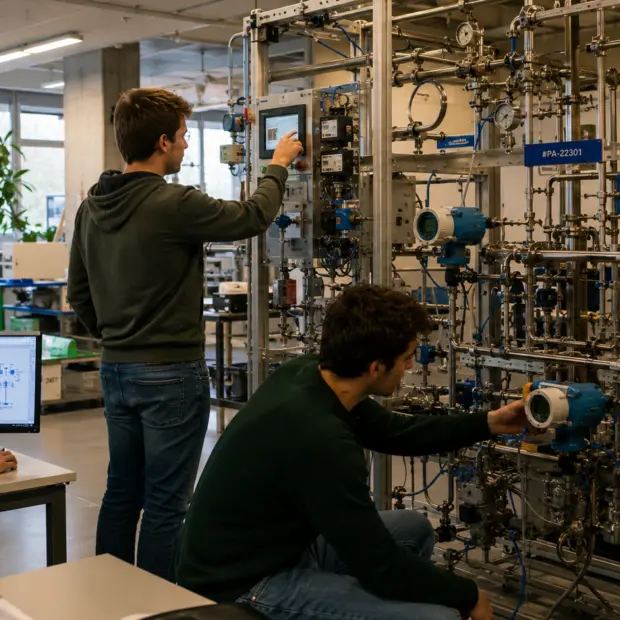
Correct material selection is essential for the safety, reliability and performance of products and installations. Insufficient knowledge of material properties can lead to wear, failure or quality issues. With a Materials Engineering training course, you develop insight into material behaviour and learn to make better technical decisions within design, production and quality control.
Would you like to deepen your materials knowledge and make better technical decisions in your work? Follow the Materials Engineering training course at Dosign Academy and develop insight that can be applied directly in practice. Strengthen your technical foundation and work with greater confidence on design and quality issues.