About Gerrit
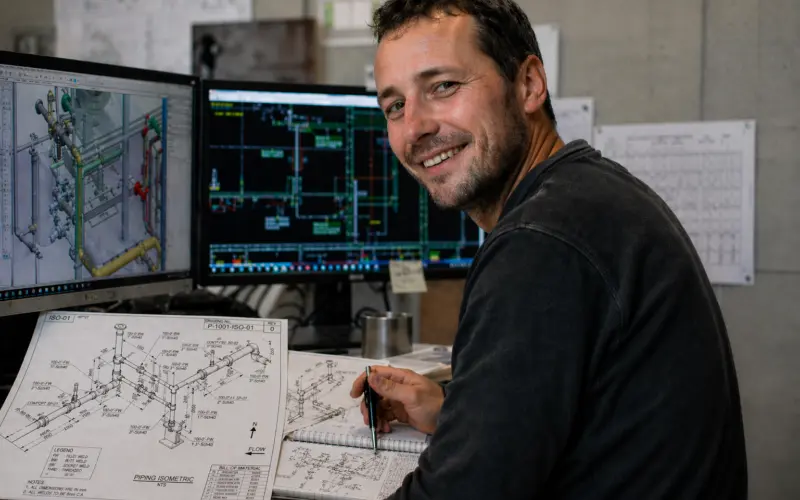
I have decades of experience in piping, gained through my work at a medium sized engineering firm, where I went through every stage from draughtsman to project leader.
After many years in that environment, I moved to a petrochemical company and worked as a Project Engineer. In that role, I was responsible for both new build and maintenance projects.
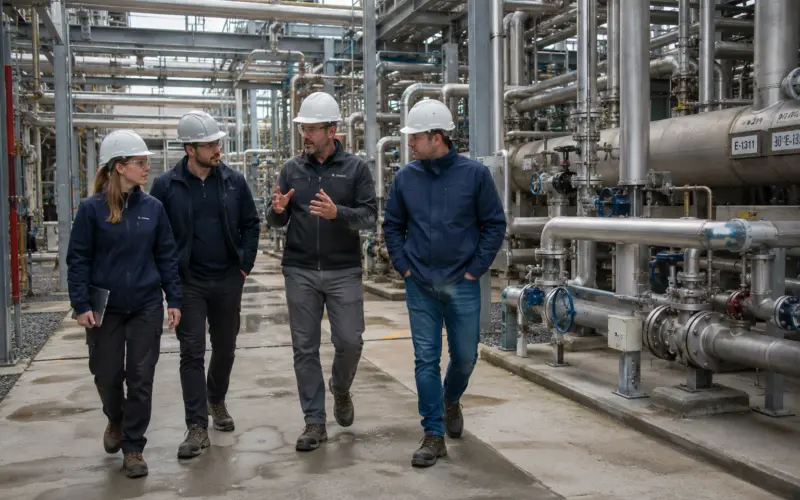
During those periods, I learned the ins and outs of piping from within, both in design and execution. Not only from the office, but also on site during construction. That experience is the reason I became involved as a lecturer in the Piping Design & Engineering programme, where I can share my knowledge and practical experience with the participants.
This piping course is above all a practical course, developed from real engineering practice.
The piping discipline has many interfaces with other disciplines, such as Process, Steel Structures, Civil, Instrumentation, Electrical and Stress. As a result, a great deal of communication is needed to make sure all disciplines are aligned. In addition to the theoretical background, each block of the course includes a practical assignment. These assignments address the interfaces with the other disciplines and introduce the fundamentals of project design and engineering.
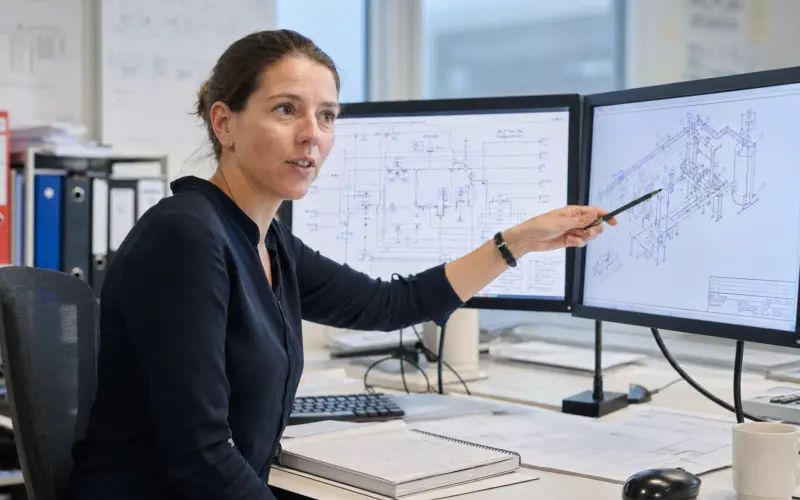
As a participant, you learn to independently read a P&ID and translate it into a plot plan and piping plan. This is where the knowledge gained during the lessons is tested against real practice.
The designs for an installation are discussed together and checked against applicable codes and standards. This is a valuable and instructive process, in which participants work in small groups to create their own design and make joint decisions to bring that design to a good result. Working in small groups encourages collaboration and learning from one another, which is essential in any project.
Years of experience with this piping course have shown that there is often a gap between theory and practice. With the practical assignments in particular, we aim to bridge that gap.
For anyone who works with, or has interfaces with, this discipline, this course is a valuable way to broaden, deepen and connect theoretical knowledge and practical experience.