

Docent Pipestress & Piping Design & Engineering
Docent Pipestress & Piping Design & Engineering
After gaining a solid understanding of expansion, flexibility, and support design, the next step is the actual calculation and evaluation of piping systems. Pipestress 2 – Calculation of Piping Systems According to Standards focuses on analysing piping systems based on applicable codes and calculation methodologies. In this training, you will gain deeper insight into how stresses and loads are calculated and how to interpret these results within engineering projects.
Course type
Technical Modules
Teaching location
Rotterdam
Course days
6 avonden
Start date
20-10-2026
Pipestress 2 is the advanced module within Dosign Academy’s Pipestress pathway. While Pipestress 1 focuses on basic understanding, design decisions and the behaviour of piping systems, Pipestress 2 goes deeper into the calculation and assessment of piping systems according to applicable codes and standards.
During this training course, you learn how pipe stress calculations are built up and how they are used to substantiate technical design decisions. You gain insight into stresses, forces, displacements and loads in piping systems, and learn how to interpret calculation results in relation to design, safety and operational reliability.
The training course focuses not only on performing calculations, but above all on understanding and assessing them. You learn where risks and points of attention arise, how standards are applied and which choices influence the outcome of a pipe stress analysis.
After completing the training course, you will be better able to read, assess and discuss pipe stress calculations. This enables you to substantiate design decisions more effectively and work more efficiently with specialists in pipe stress projects.

Pipestress 2 is designed for piping engineers, mechanical engineers and technical professionals who already have a basic understanding of pipe stress and want to deepen their knowledge of calculations, codes and standards, and the assessment of piping systems.
The training course builds on Pipestress 1, but is also suitable for professionals who have gained comparable practical experience in piping design, piping systems or pipe stress analysis.
Within the Pipestress pathway, Pipestress 2 forms the step from basic understanding to technical assessment. You learn to better understand calculations, interpret results and apply codes and standards within technical design decisions.
This makes the module a logical preparation for Pipestress 3, which goes deeper into pressure retaining components and specific load cases.
Together, Pipestress 1, 2 and 3 form a coherent pathway for professionals who want to build and deepen their knowledge of pipe stress in a structured way.
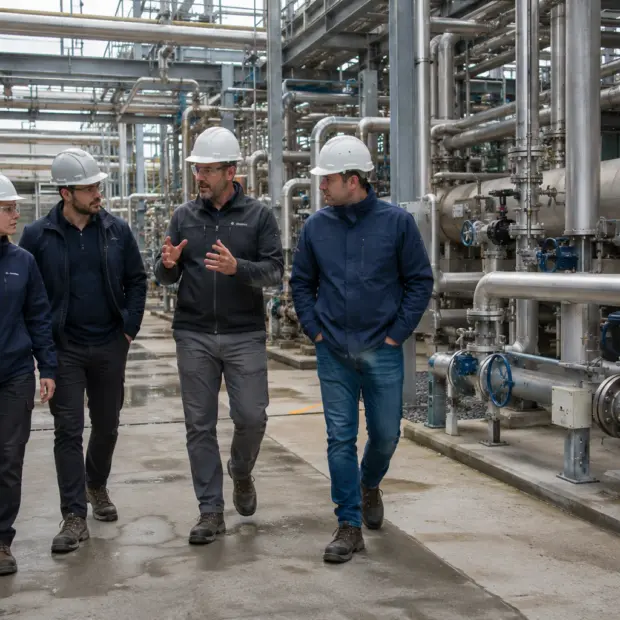
The training course consists of 6 evening sessions, from 17:30 to 22:00. A warm evening meal, study materials, assessment and certificate are included.
The fee is €1,627.50 per person, excluding VAT.
Fee: €1,627.50 excluding VAT
Duration: 6 evenings
Diploma and discount
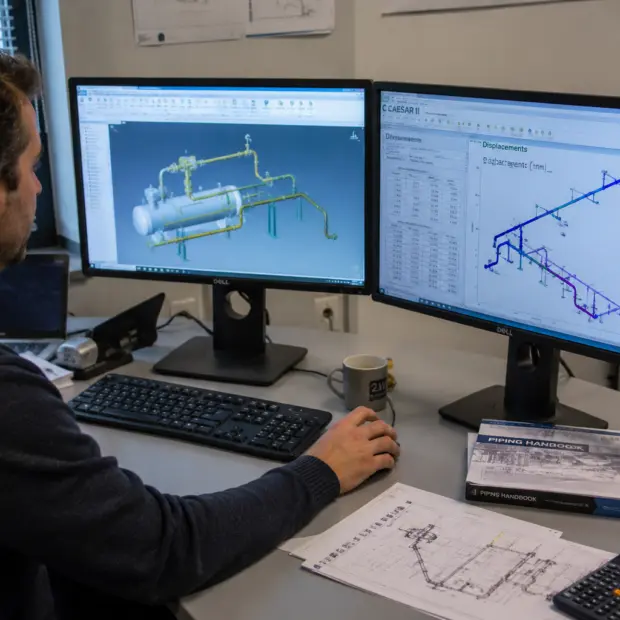

Docent Pipestress & Piping Design & Engineering

Hans Mouws is docent Piping Design & Engineering in Antwerpen en Bergen op Zoom

Daniel van der Ham | 19-04-2027
Do you want to learn how to lead a construction team with a sharp focus on safety, quality, budget and planning? Dosign Academy’s Construction Management programme prepares you for a responsible role in both modification and new build projects in the process industry.
You learn not only how to organise projects efficiently, but also how to safeguard safety, manage risks and lead people. With this programme, you build a strong foundation for a career as a construction manager within complex technical projects.


Shahrad Ghanbari | 16-02-2027
In modern technical systems, measurement data is everywhere. Sensors continuously measure vibration, pressure, temperature, flow and electrical signals. In practice, this data is rarely clean. Noise, disturbances and unstable behaviour make it difficult to determine what a system is actually doing. Signal processing is the discipline that enables engineers to solve this problem.
Pipe stress calculations require a combination of knowledge of codes and standards, technical insight and the ability to interpret results. At Dosign Academy, you learn not only how calculations are performed, but above all how to understand the results and apply them within projects.
Personal advice and guidance
We help you determine whether Pipestress 2 matches your current knowledge level and experience. This training course is designed for professionals who already have a basic understanding of pipe stress and want to deepen their knowledge of calculations and analysis.
Experienced lecturers from industry
Our lecturers have extensive experience in piping engineering, pipe stress calculations and industrial codes and standards. They share practical examples and show how calculations are used and assessed in real projects.
Practical pipe stress training
The focus is on applicable knowledge. You learn how pipe stress calculations are used as a tool in design and engineering questions, not as a purely theoretical exercise.
Codes and standards form the basis for safe and reliable piping systems. By performing and assessing pipe stress calculations in accordance with applicable requirements, you gain insight into allowable stresses, forces and deformations.
Pipestress 2 helps you understand, verify and apply calculations, so that piping systems meet both technical requirements and the requirements set out in applicable codes and standards.
Do you want to learn how to calculate and assess piping systems according to applicable codes and standards? Choose Pipestress 2: Calculation of piping systems according to codes and standards at Dosign Academy and deepen your technical understanding of pipe stress calculations.
Work with greater confidence on design and engineering issues within piping systems.