
Docent Pipestress & Piping Design & Engineering
Docent Pipestress & Piping Design & Engineering
Piping affects almost every part of a process installation: from safety, maintenance and accessibility to instrumentation, structural engineering, equipment and construction. In this training course, engineers gain insight into the principles and design choices behind piping systems in the process industry. Participants learn how topics such as material selection, corrosion, piping specifications, piperacks, utilities, 3D design, pipe supports and pipe stress are interconnected.
This enables them to contribute more effectively to projects, assess design documentation more purposefully and identify risks at an earlier stage.
Course type
Technical Modules
Teaching location
Rotterdam
Course days
5 evenings
Start date
05-11-2026
The training course consists of five practice-oriented sessions in which participants develop a step-by-step understanding of the key principles of piping within process installations. From material selection and corrosion to piperacks, utilities, 3D models, pipe supports and welding documentation, each session addresses a topic that directly affects the safety, reliability, maintainability and constructability of an installation.
Participants will not learn how to develop complete pipe routes or build piping models themselves. The focus is on understanding the choices made by piping engineers and the consequences of those choices for process, mechanical, E&I, structural engineering, maintenance and construction. This enables participants to interpret design documentation more effectively, contribute more purposefully to meetings and interdisciplinary checks, and identify earlier when a design decision may affect space, accessibility, safety, cost or maintenance.
The sessions combine fundamental technical knowledge with recognisable practical situations from engineering and modification projects. This provides broad and directly applicable insight into piping, without training participants to become piping designers.
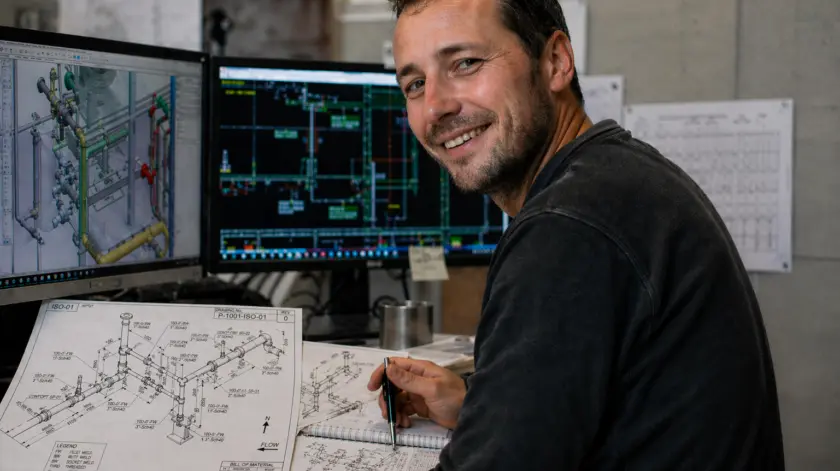
his training course is intended for technical professionals who regularly work with piping but do so from another discipline. This includes:
The training course has been specifically developed for professionals who need to understand, assess and coordinate piping more effectively within their own role. Professionals who need to develop pipe routes, 3D models, isometric drawings and complete piping designs themselves would be better suited to the Piping Design & Engineering programme.
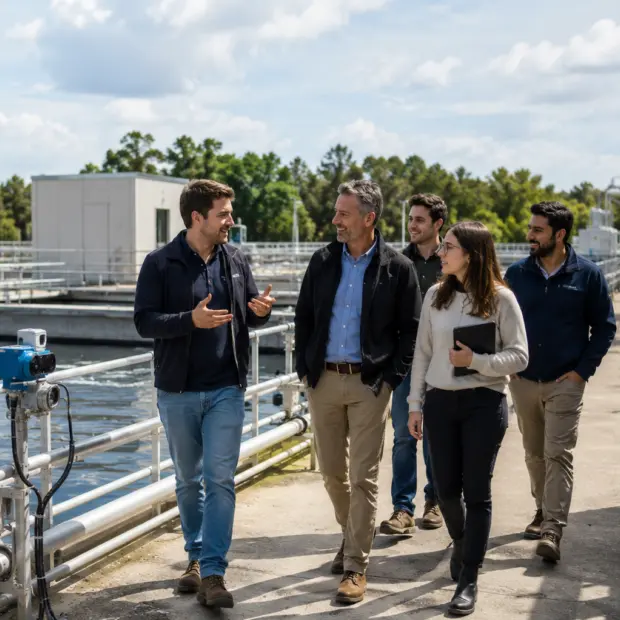
The Piping in the Process Industry training course consists of five evening sessions. A hot evening meal, course materials and a certificate of participation are included. The fee is €1,862.50 per person, excluding VAT.
Investment: €1,862.50 excluding VAT
Duration: 5 evenings
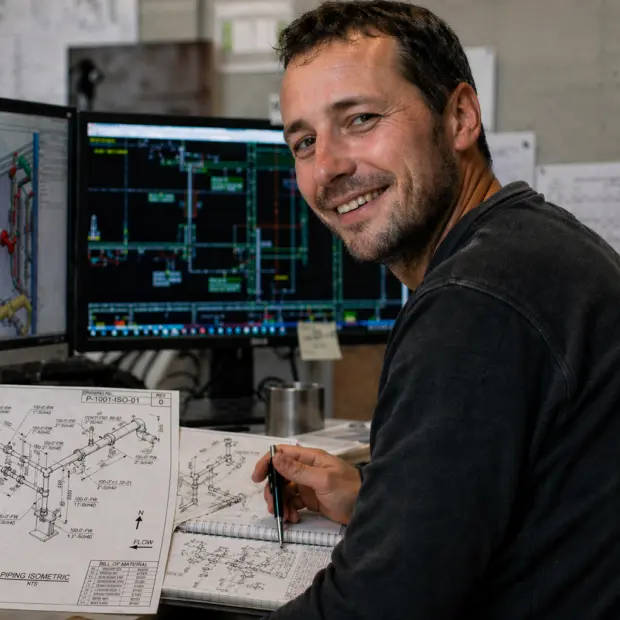

Docent Pipestress & Piping Design & Engineering

Hans Mouws is docent Piping Design & Engineering in Antwerpen en Bergen op Zoom

Mohammad Arab | 19-10-2026
Technical drawings are among the most important sources of information in technical work. Within process engineering, PFDs (Process Flow Diagrams) and the more detailed P&IDs (Piping & Instrumentation Diagrams) are widely used. Reading and interpreting these drawings correctly is essential for the successful execution of projects in the process industry. Dosign Academy’s PFD & P&ID Interpretation training course provides the knowledge and skills required to understand and apply these drawings effectively in your work.


AutoCAD is the global standard for creating technical drawings. Do you work with drawings, or would you like to learn how to create professional 2D drawings yourself, but have little experience with AutoCAD? With Dosign Academy’s AutoCAD 2D Basics course, you will learn to work with the software quickly and purposefully. During this training course, you will develop the basic skills needed to create, modify and process technical drawings independently in your day-to-day work.


Harmen Breedeveld | 05-10-2026
In technische omgevingen is schriftelijke communicatie geen bijzaak, maar een cruciaal onderdeel van het werk. Rapportages, inspectieverslagen en adviezen vormen de basis voor belangrijke besluitvorming. Toch ervaren veel engineers dat hun rapportages te lang worden of onvoldoende overtuigen, ondanks hun sterke inhoudelijke kennis. Met de training schriftelijke rapportage van Dosign Academy leer je technische informatie helder, compact en logisch vastleggen. Zo voorkom je fouten en vertraging, en maak je van schrijven een functioneel en effectief onderdeel van je werk.
In multidisciplinary projects, bottlenecks often arise at the interfaces between disciplines. A pipe route may seem technically correct, but may also block maintenance access, conflict with cable trays, leave insufficient room for instrumentation or prove difficult to execute on site.
With greater insight into piping, employees recognise these consequences earlier. They better understand what information piping requires, which design choices are critical and when they need to ask further questions. This leads to stronger collaboration, better design decisions and fewer surprises during engineering, construction and commissioning.
After completing the training course, participants will be able to interpret piping documentation more effectively, participate more effectively in design meetings and interdisciplinary checks, and contribute more purposefully to safe, constructible and maintainable process installations.
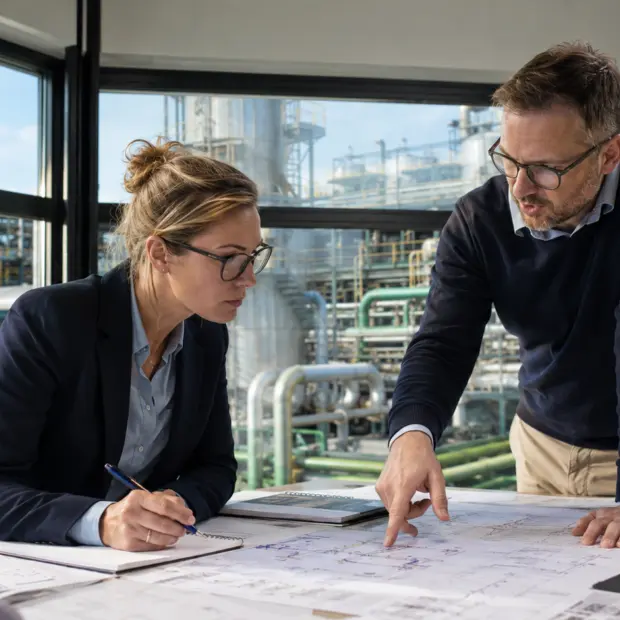
After completing the training course, participants will have a shared technical frame of reference for piping within the process industry. They will better understand the key terminology, design considerations and interfaces with their own discipline, enabling them to participate in design meetings, reviews and modification projects with greater confidence. If desired, the training course can be concluded with a short knowledge assessment. Participants receive a certificate of participation upon completion.